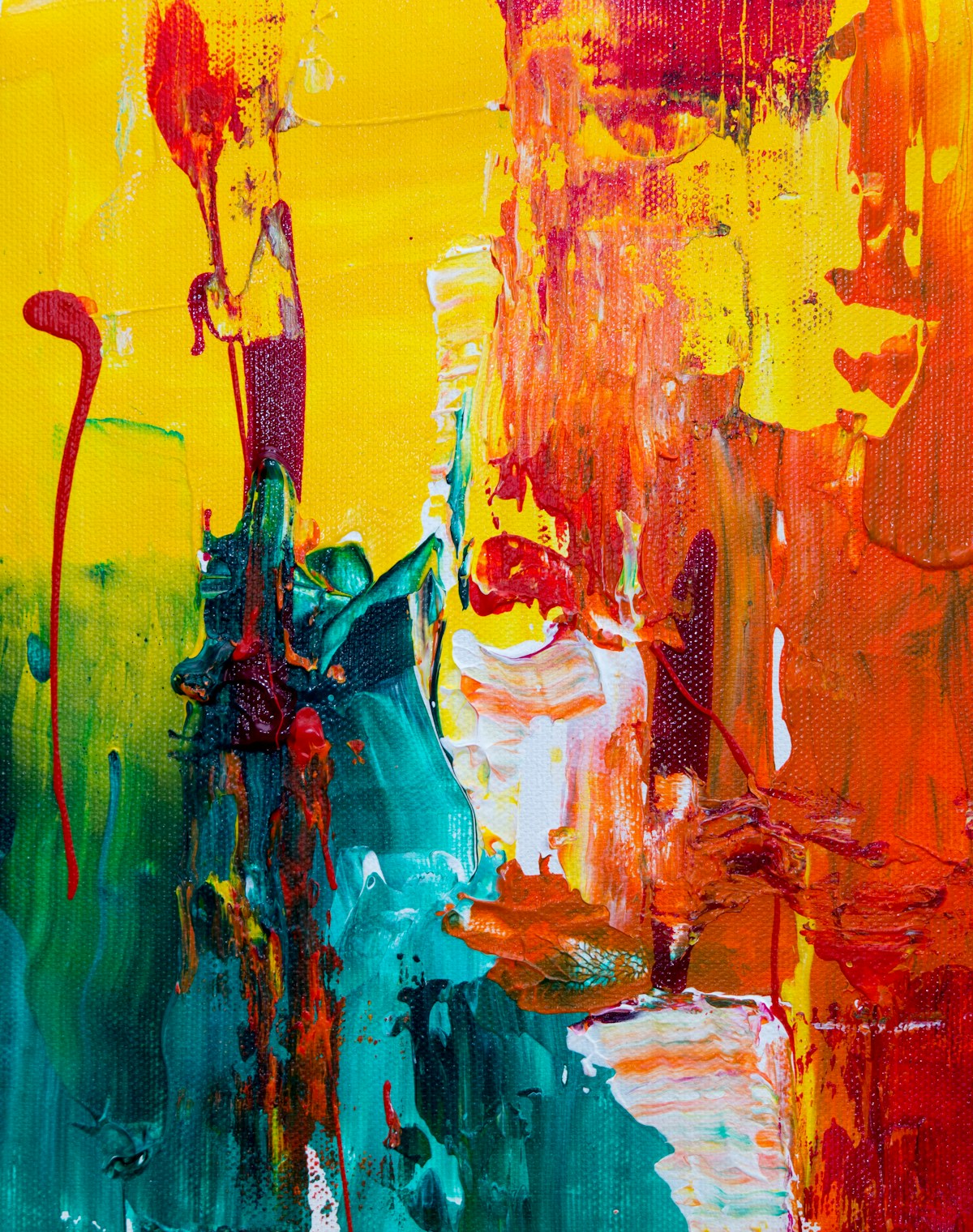
Studio Notes: Behind 'The Gold Series' at Whitespace Gallery
Six months of work. Forty-two studies. Eight final canvases. The Gold Series began with a single question: what does grief look like when it starts to heal?
The answer, I discovered, was light — specifically, the way afternoon light filters through linen curtains and turns everything it touches into something sacred.
The Beginning
I started working on what would become The Gold Series in the spring of 2025, following the death of my grandmother. She was ninety-three and had lived a full, extraordinary life, and her death was not unexpected. But grief, I have learned, does not follow logic. It arrives in its own time and in its own form, and it asks things of you that you cannot anticipate.
What it asked of me was gold.
I had been working with gold leaf for several years by then, but always as one element among many — a highlight here, a passage of gilding there. After my grandmother died, I found myself reaching for it constantly, compulsively, as if the gold could do something that paint alone could not. It took me several weeks to understand what that something was.
Gold is the colour of memory when it has been transformed by time — not the raw, painful gold of fresh loss, but the warm, settled gold of remembrance.
The Studies
The forty-two studies that preceded the final works were not preparatory sketches in the traditional sense. They were more like conversations — attempts to understand what the series wanted to be before I committed to the scale and materials of the final canvases.
Some of them were very small — postcard-sized pieces on paper, worked quickly in oil and ink. Others were larger, on canvas, and took weeks to complete. A few of them are among the best things I have ever made, and they will never be shown publicly. They belong to the process, not the exhibition.
What emerged from the studies was a vocabulary: a particular quality of mark-making, a palette of warm ochres and deep umbers punctuated by passages of gold, a sense of space that was neither interior nor exterior but somewhere between the two. The paintings felt like rooms that had been emptied of furniture but retained the warmth of habitation.
The Eight Canvases
The final eight works range in size from 40 × 48 inches to 60 × 72 inches. Each one took between four and eight weeks to complete, with periods of waiting in between — waiting for layers to dry, waiting for the work to tell me what it needed next.
The largest canvas, which became the centrepiece of the exhibition, was the most difficult. I repainted it three times. The first two versions were technically accomplished but emotionally inert — they looked like paintings about grief rather than paintings that had been made from grief. The third version came quickly, in a single sustained session of about six hours, and it was right from the beginning. I knew it immediately.
That experience — of making the same painting three times before finding it — is one I have had before, and it never gets easier. But it is also one of the most clarifying experiences I know. When you finally arrive at the right version, you understand, with absolute certainty, that the earlier attempts were necessary. They were not failures. They were the path.
The Exhibition
The Gold Series opened at Whitespace Gallery in January 2026 and ran for six weeks. The gallery's director, Clara Voss, installed the works with extraordinary care — spacing them generously, allowing each painting room to breathe, lighting them with a warmth that brought out the gold without overwhelming it.
The opening was attended by collectors, critics, and friends, and the response was more generous than I had dared to hope. Three of the eight works sold on the opening night. The remaining five found homes over the course of the exhibition.
But what I remember most from the opening is not the sales or the reviews. It is a woman — a stranger — who stood in front of the largest canvas for nearly twenty minutes without moving. When she finally turned away, her eyes were wet. She caught my eye across the room and nodded once, and I understood that the painting had done what I had hoped it would do.
That is enough. That is everything.
Nekyta Kyara
Contemporary Artist & Studio Practice